Quick Facts
- Type
- Single
- Category
- Anti-Aging / Longevity
- Vial Strength
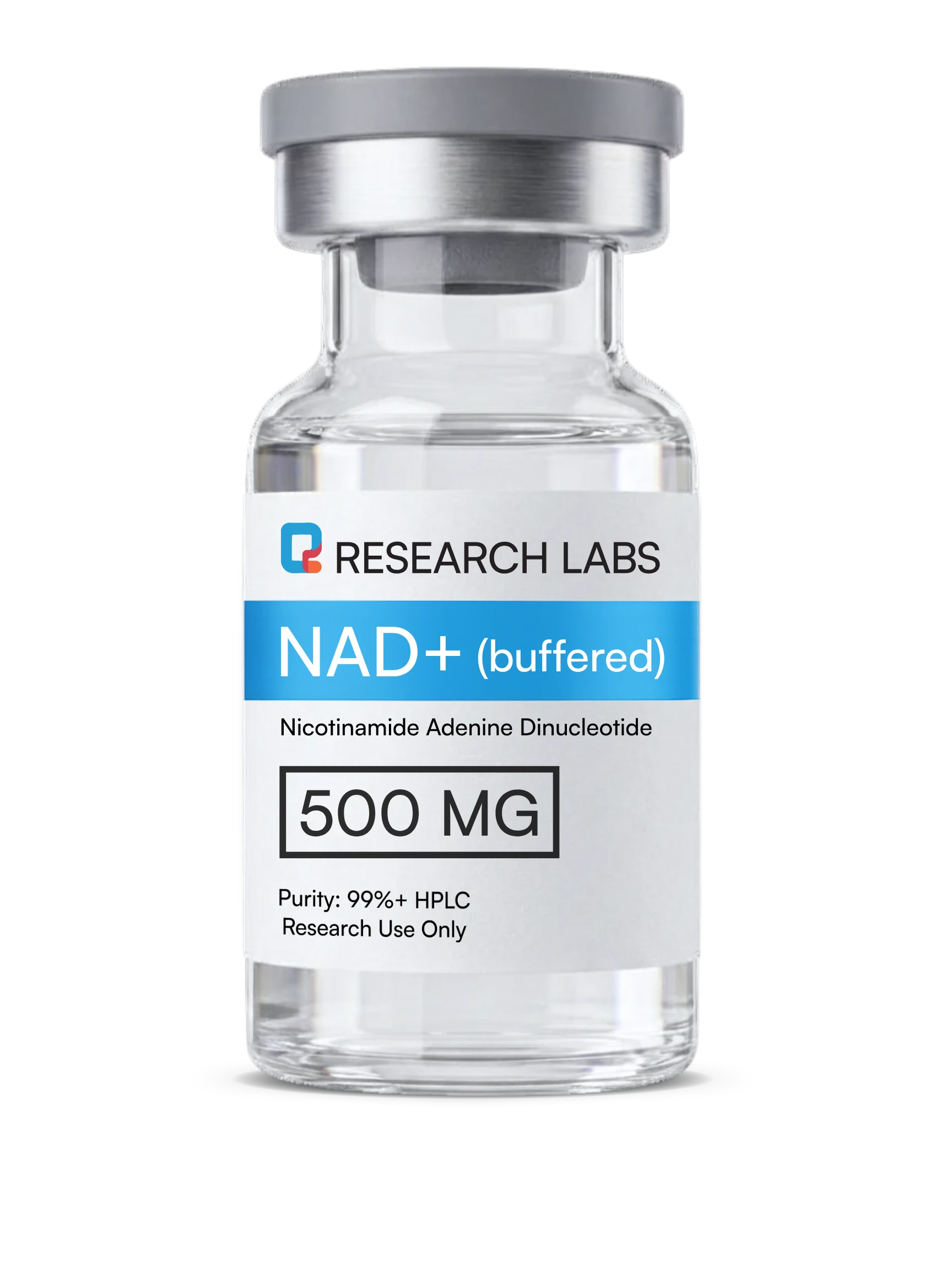
- 500 mg
- Status
- Research
Research Purposes Only
This information is provided for educational purposes only. This content is not intended to diagnose, treat, cure, or prevent any disease. Always consult with qualified healthcare professionals.
Download Guide
Save the complete NAD+ 500mg research guide as a PDF.
Educational and research use only. Not medical advice.
Reference
Sources used for this guide are listed in our research database .
What Is NAD+ 500mg?
NAD+ 500mg Vial Overview
NAD+ (Nicotinamide Adenine Dinucleotide) is a coenzyme essential to cellular energy production, DNA repair, and sirtuin activation. NAD+ levels naturally decline with age, contributing to metabolic dysfunction and cellular senescence. Research shows NAD+ supplementation restores mitochondrial function, activates sirtuins (SIRT1-7) for DNA repair and gene expression regulation, and improves cellular energy metabolism. Studies demonstrate benefits for cognitive function, cardiovascular health, and exercise performance.
NAD+ 500mg Quick Reference
NAD+ 500mg Vial Specifications
- Peptide
- NAD+ (500 mg Vial) (NNMT inhibitor)
- Vial Content
- 500 mg total
- Category
- Anti-Aging / Longevity
- Administration Method
- Subcutaneous injection or IV infusion
- Common Use Case
- Cellular energy restoration, DNA repair, and longevity
NAD+ 500mg Compared With Other Formats
Details that distinguish this 500 mg format include:
- Essential coenzyme for 500+ enzymatic reactions
- Activates all 7 sirtuins for DNA repair and gene regulation
- Restores age-declined mitochondrial function
How Does NAD+ Work?
NAD+ Mechanism of Action
NAD+ is a coenzyme required for oxidative phosphorylation, DNA repair (via PARPs), epigenetic regulation (via sirtuins), and calcium signaling (via CD38). Levels decline approximately 50% between ages 40 and 60. Supplementation restores mitochondrial function, activates SIRT1-7 for gene silencing and DNA repair, and improves cellular energy metabolism.
What Are the Potential Benefits of NAD+?
NAD+ Research Findings and Observed Outcomes
Findings and reported areas of study for NAD+ (500 mg Vial) include:
- Restored cellular energy production
- Enhanced DNA repair via sirtuin activation
- Improved cognitive function
- Cardiovascular health support
These observations are discussed for research and educational reference only and are not medical claims.
What Do You Need to Reconstitute NAD+ 500mg?
NAD+ 500mg Supplies for Reconstitution and Handling
- •Syringes (appropriate gauge)
- •Bacteriostatic water or sterile saline
- •Alcohol prep pads
- •Sharps container
Supplies listed are for laboratory handling and research preparation purposes only.
NAD+ 500mg Administration and Research Protocol
NAD+ Injection Route, Frequency and Timing
SubQ may cause mild stinging. Slow injection reduces discomfort.
NAD+ 500mg Dosage Guide
NAD+ Dosage Ranges
The ranges below pair the listed dose with the draw volume for this product strength.
NAD+ 500mg Dosage to Syringe Units
Based on reconstitution below
| Target Daily Dose | Draw Volume | Units |
|---|---|---|
| 50 mg | 0.10 mL | 10 units |
| 100 mg | 0.20 mL | 20 units |
| 250 mg | 0.50 mL | 50 units |
This dosing table is unique to the 500 mg vial. Units refer to markings on a standard U-100 insulin syringe (1 unit = 0.01 mL).
How Long Does a NAD+ 500mg Vial Last?
NAD+ 500mg Duration by Research Dose
At common research doses, one 500 mg vial of NAD+ typically supports:
Ongoing or cycled protocols.
How to Reconstitute NAD+ 500mg
NAD+ 500mg Reconstitution With Bacteriostatic Water
This section applies specifically to the NAD+ (500 mg Vial).
- Recommended Diluent
- Bacteriostatic water or sterile saline
- Diluent Volume
- 1 mL
- Final Concentration
- 500 mg/mL
NAD+ 500mg Mixing Instructions
- 1Remove the vial from storage and allow it to reach room temperature (10–15 minutes).
- 2Wash hands thoroughly and prepare a clean workspace with all supplies.
- 3Using a sterile syringe, draw the appropriate volume of bacteriostatic water.
- 4Clean the rubber stopper of the vial with an alcohol prep pad.
- 5Insert the needle at a slight angle and slowly inject the diluent down the inner wall of the vial.
- 6Gently swirl or roll the vial until fully dissolved; the solution should appear clear and colorless.
- 7Label the vial with reconstitution date and refrigerate at 2–8 °C (35.6–46.4 °F), protected from light. Use within 2–4 weeks.
NAD+ Stacks and Research Combinations
NAD+ and Compatible Research Pairings
In research settings, NAD+ (500 mg Vial) is sometimes paired with peptides such as:
Factors That May Affect NAD+ Research Outcomes
Supporting Factors for NAD+ Research
Factors recorded alongside this protocol include:
- Circadian rhythm optimization
- Regular exercise
- Anti-inflammatory diet
- Stress management
These factors can affect how research observations are interpreted.
NAD+ Side Effects and Safety Considerations
NAD+ 500mg Tolerability Notes
Generally well-tolerated. SubQ can cause local discomfort.
Some individuals report:
- Injection site stinging/burning
- Mild nausea (especially IV)
- Flushing
- Headache
How to Store NAD+ Before and After Reconstitution
NAD+ 500mg Storage Requirements
- Unreconstituted
- Refrigerate
- Reconstituted
- Refrigerate at 2–8°C
- Post-Mix Stability
- Up to 4 weeks
Who Should Avoid NAD+?
This peptide is generally not recommended for:
- Pregnant or breastfeeding individuals
- Those with active cancer (NAD+ may fuel cancer cell metabolism)
- Anyone advised otherwise by a healthcare professional
NAD+ 500mg FAQs
SubQ vs IV NAD+?
IV provides immediate bioavailability but requires clinical setting. SubQ is more convenient for regular home use with good absorption.
Why does SubQ NAD+ sting?
NAD+ is mildly acidic and can irritate tissue. Slow injection and proper dilution help minimize discomfort.
Where to Buy NAD+ 500mg for Research
NAD+ 500mg Purchasing and Research Supply Notes
Before ordering NAD+ (500 mg Vial), review the product label, available testing documents, and storage instructions.
Check the ResearchLabs listing for:
- Available testing documents
- Product strength and concentration
- Storage and handling instructions
- Current product availability
View the current listing for NAD+ (500 mg Vial):
→ View on ResearchLabsConfirm the product strength and storage requirements before ordering. Products are for laboratory research only and are not for human consumption.
Quick Facts
- Type
- Single
- Category
- Anti-Aging / Longevity
- Vial Strength
- 500 mg
- Status
- Research
Research Purposes Only
This information is provided for educational purposes only. This content is not intended to diagnose, treat, cure, or prevent any disease. Always consult with qualified healthcare professionals.
Download Guide
Save the complete NAD+ 500mg research guide as a PDF.
Educational and research use only. Not medical advice.
Reference
Sources used for this guide are listed in our research database .