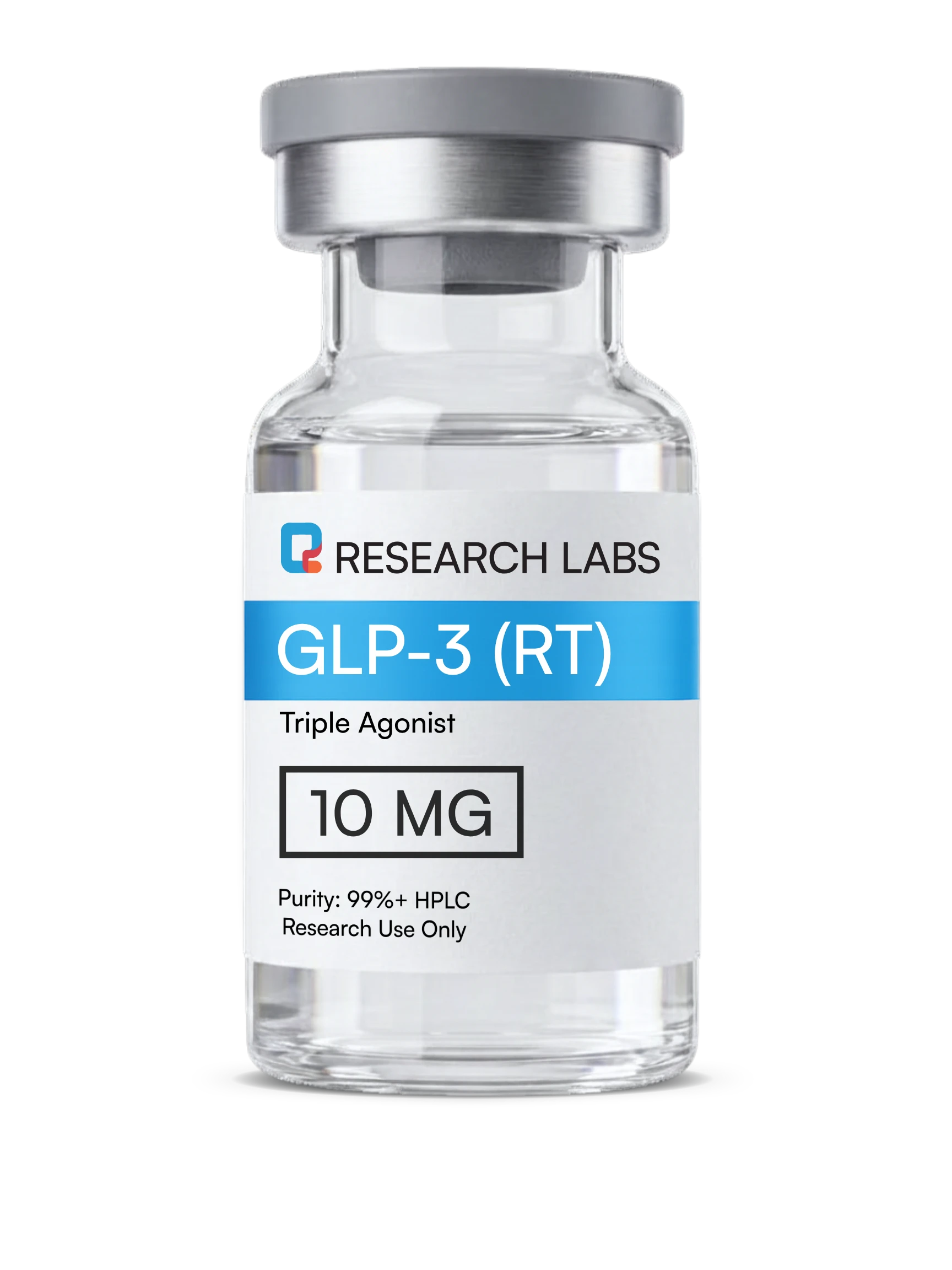
Adipotide (FTPP) (10 mg Vial)
10 mg Research Peptide
Quick Facts
- Type
- Single
- Category
- Metabolic / Weight Loss
- Vial Strength
- 10 mg
- Status
- Research
Research Purposes Only
This information is provided for educational purposes only. This content is not intended to diagnose, treat, cure, or prevent any disease. Always consult with qualified healthcare professionals.
Download Guide
Save the complete Adipotide (FTPP) 10mg research guide as a PDF.
Educational and research use only. Not medical advice.
Reference
Sources used for this guide are listed in our research database .
What Is Adipotide (FTPP) 10mg?
Adipotide (FTPP) 10mg Vial Overview
Adipotide (FTPP) is an experimental peptidomimetic compound designed to target and destroy fat tissue blood vessels through a dual-peptide mechanism. It consists of a targeting sequence (CKGGRAKDC) that binds to prohibitin on adipose vasculature, coupled to a pro-apoptotic peptide that induces cell death. In primate studies, Adipotide produced rapid, substantial fat loss by cutting off blood supply to fat cells. It remains highly experimental with significant safety considerations.
Adipotide (FTPP) 10mg Quick Reference
Adipotide (FTPP) 10mg Vial Specifications
- Peptide
- Adipotide (FTPP) (10 mg Vial) (NNMT inhibitor)
- Vial Content
- 10 mg total peptide
- Category
- Metabolic / Weight Loss
- Administration Method
- Subcutaneous injection
- Common Use Case
- Aggressive fat loss and adipose tissue reduction protocols
Adipotide (FTPP) 10mg Compared With Other Formats
Details that distinguish this 10 mg format include:
- Precise dosing control for a highly potent compound
- Suitable for conservative or introductory research protocols
- Lower material commitment for initial tolerability assessment
The 10 mg vial allows for 20+ day cycles at conservative doses, making it appropriate for evaluating individual response before committing to larger quantities.
How Does Adipotide (FTPP) Work?
Adipotide (FTPP) Mechanism of Action
Adipotide (also known as FTPP or Prohibitin-TP01) is a chimeric peptidomimetic consisting of two functional domains: a targeting peptide sequence (CKGGRAKDC) that selectively binds to prohibitin receptors expressed on the surface of blood vessels supplying white adipose tissue, and a pro-apoptotic peptide (D(KLAKLAK)2) that triggers mitochondrial membrane disruption and programmed cell death. By destroying the vasculature feeding fat deposits, Adipotide causes adipose tissue to undergo ischemic necrosis and subsequent resorption. This vascular-targeting approach represents a fundamentally different mechanism than metabolic or lipolytic fat-loss compounds.
What Are the Potential Benefits of Adipotide (FTPP)?
Adipotide (FTPP) Research Findings and Observed Outcomes
Findings and reported areas of study for Adipotide (FTPP) (10 mg Vial) include:
- Rapid and substantial reduction in adipose tissue mass
- Targeted action on fat tissue vasculature rather than systemic metabolism
- Potential for permanent fat cell reduction in treated areas
- Diet and exercise-independent mechanism of action
These observations are discussed for research and educational reference only and are not medical claims.
What Do You Need to Reconstitute Adipotide (FTPP) 10mg?
Adipotide (FTPP) 10mg Supplies for Reconstitution and Handling
- •Sterile syringes (≥3 mL capacity for diluent)
- •Insulin syringes (typically 29–31 gauge)
- •Bacteriostatic water
- •Alcohol prep pads
- •Sharps container
- •Labels or marker for dating reconstituted vials
Supplies listed are for laboratory handling and research preparation purposes only.
Adipotide (FTPP) 10mg Administration and Research Protocol
Adipotide (FTPP) Injection Route, Frequency and Timing
Subcutaneous injection is standard. Rotate injection sites. Kidney function monitoring is essential due to the compound's renal clearance and apoptotic metabolites.
Adipotide (FTPP) 10mg Dosage Guide
Adipotide (FTPP) Dosage Ranges
The ranges below pair the listed dose with the draw volume for this product strength.
Adipotide (FTPP) 10mg Dosage to Syringe Units
Based on reconstitution below
| Target Daily Dose | Draw Volume | Units |
|---|---|---|
| 0.5 mg (500 mcg) | 0.10 mL | 10 units |
| 1.0 mg | 0.20 mL | 20 units |
| 2.0 mg | 0.40 mL | 40 units |
This dosing table is unique to the 10 mg vial. Units refer to markings on a standard U-100 insulin syringe (1 unit = 0.01 mL).
How Long Does a Adipotide (FTPP) 10mg Vial Last?
Adipotide (FTPP) 10mg Duration by Research Dose
At common research doses, one 10 mg vial of Adipotide (FTPP) typically supports:
Cycles of 4–6 weeks are commonly referenced in research literature, followed by extended washout periods to allow kidney function recovery.
How to Reconstitute Adipotide (FTPP) 10mg
Adipotide (FTPP) 10mg Reconstitution With Bacteriostatic Water
This section applies specifically to the Adipotide (FTPP) (10 mg Vial).
- Recommended Diluent
- Bacteriostatic water
- Diluent Volume
- 2 mL
- Final Concentration
- 5 mg/mL (5,000 mcg/mL)
Adipotide (FTPP) 10mg Mixing Instructions
- 1Remove the vial from storage and allow it to reach room temperature (10–15 minutes).
- 2Wash hands thoroughly and prepare a clean workspace with all supplies.
- 3Using a sterile syringe, draw the appropriate volume of bacteriostatic water.
- 4Clean the rubber stopper of the vial with an alcohol prep pad.
- 5Insert the needle at a slight angle and slowly inject the diluent down the inner wall of the vial.
- 6Gently swirl or roll the vial until fully dissolved; the solution should appear clear and colorless.
- 7Label the vial with reconstitution date and refrigerate at 2–8 °C (35.6–46.4 °F), protected from light. Use within 2–4 weeks.
Adipotide (FTPP) Stacks and Research Combinations
Adipotide (FTPP) and Compatible Research Pairings
In research settings, Adipotide (FTPP) (10 mg Vial) is sometimes paired with peptides such as:
- BPC-157: For potential nephroprotective and tissue-repair support
- TB-500: For systemic recovery and healing during aggressive protocols
Stacking with other fat-loss compounds (AOD-9604, GH secretagogues) has not been studied and may increase systemic stress. Protective peptides are more commonly paired with Adipotide.
Factors That May Affect Adipotide (FTPP) Research Outcomes
Supporting Factors for Adipotide (FTPP) Research
Factors recorded alongside this protocol include:
- Maintain excellent hydration (3–4+ liters/day) to support renal clearance
- Regular kidney function monitoring (BUN, creatinine, GFR)
- Adequate protein intake to support tissue remodeling
- Moderate physical activity; avoid extreme metabolic stress during cycles
These factors can affect how research observations are interpreted.
Adipotide (FTPP) Side Effects and Safety Considerations
Adipotide (FTPP) 10mg Tolerability Notes
Adipotide carries significant safety considerations due to its mechanism of action. The apoptotic peptide component, while targeted, can produce off-target effects. Close monitoring is essential.
Some individuals report:
- Mild injection site reactions (redness, swelling)
- Kidney stress or transient renal impairment
- Dehydration symptoms
- Fatigue and malaise during treatment
- Potential for off-target vascular effects
How to Store Adipotide (FTPP) Before and After Reconstitution
Adipotide (FTPP) 10mg Storage Requirements
- Unreconstituted
- Store frozen at -20°C or refrigerated at 2–8°C
- Reconstituted
- Refrigerate at 2–8°C (35.6–46.4°F)
- Post-Mix Stability
- Up to 2–3 weeks when properly refrigerated
- Protect from light at all times.
- Do not freeze reconstituted solution.
- Discard if solution becomes cloudy, discolored, or contains particles.
- Use sterile technique when accessing the vial.
- Adipotide is sensitive to repeated freeze-thaw cycles.
Who Should Avoid Adipotide (FTPP)?
This peptide is generally not recommended for:
- Pregnant or breastfeeding individuals
- Those with kidney disease or impaired renal function
- Individuals with cardiovascular disease or vascular disorders
- Those with autoimmune conditions
- Anyone with a history of blood clotting disorders
- Anyone advised otherwise by a healthcare professional
Adipotide (FTPP) 10mg FAQs
How does Adipotide differ from other fat-loss peptides?
Unlike lipolytic peptides (AOD-9604, HGH fragments) that promote fat breakdown, Adipotide destroys the blood vessels feeding fat tissue, causing the fat cells themselves to die. This is a permanent structural change rather than metabolic modulation.
Is the fat loss from Adipotide permanent?
In theory, yes—destroyed adipocytes do not regenerate. However, remaining fat cells can still expand, and new fat can accumulate elsewhere. Lifestyle factors remain important.
Why is kidney monitoring so important?
The apoptotic debris from destroyed fat tissue is cleared through the kidneys. High doses or extended cycles can stress renal function. Regular monitoring of BUN, creatinine, and GFR is essential.
What was shown in the primate studies?
In rhesus monkeys, 28 days of Adipotide treatment produced approximately 11% reduction in body weight and over 38% reduction in abdominal fat. Treated animals also showed improved insulin sensitivity. Some kidney changes were observed but resolved after treatment cessation.
Where to Buy Adipotide (FTPP) 10mg for Research
Adipotide (FTPP) 10mg Purchasing and Research Supply Notes
Before ordering Adipotide (FTPP) (10 mg Vial), review the product label, available testing documents, and storage instructions.
Check the ResearchLabs listing for:
- Available testing documents
- Product strength and concentration
- Storage and handling instructions
- Current product availability
Confirm the product strength and storage requirements before ordering. Products are for laboratory research only and are not for human consumption.
Adipotide (FTPP) (10 mg Vial)
10 mg Research Peptide
Quick Facts
- Type
- Single
- Category
- Metabolic / Weight Loss
- Vial Strength
- 10 mg
- Status
- Research
Research Purposes Only
This information is provided for educational purposes only. This content is not intended to diagnose, treat, cure, or prevent any disease. Always consult with qualified healthcare professionals.
Download Guide
Save the complete Adipotide (FTPP) 10mg research guide as a PDF.
Educational and research use only. Not medical advice.
Reference
Sources used for this guide are listed in our research database .