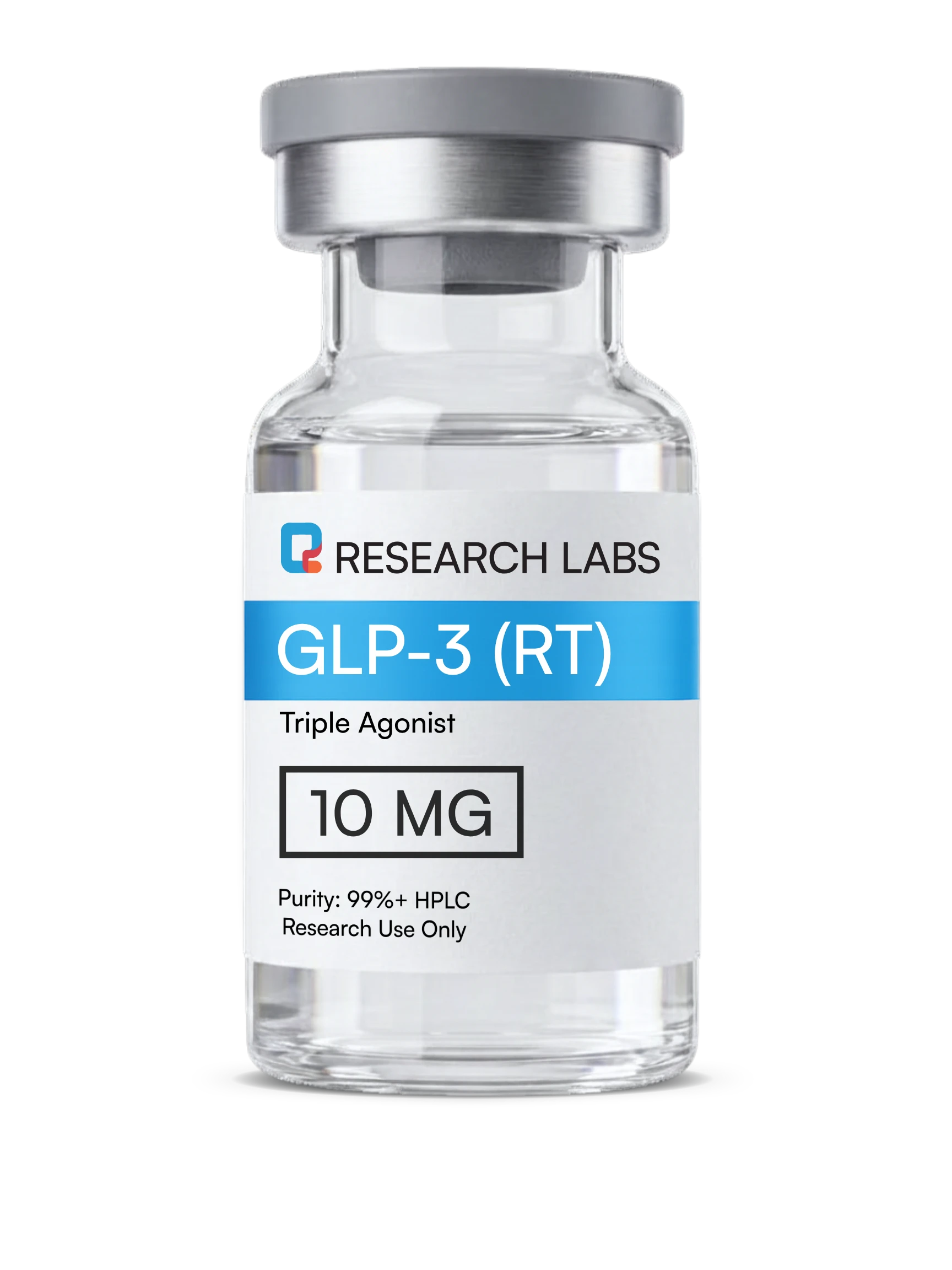
Quick Facts
- Type
- Single
- Category
- Metabolic / Weight Loss
- Vial Strength
- 10 mg
- Status
- Research
Research Purposes Only
This information is provided for educational purposes only. This content is not intended to diagnose, treat, cure, or prevent any disease. Always consult with qualified healthcare professionals.
Download Guide
Save the complete Retatrutide 10mg research guide as a PDF.
Educational and research use only. Not medical advice.
Reference
Sources used for this guide are listed in our research database .
What Is Retatrutide 10mg?
Retatrutide 10mg Vial Overview
Retatrutide is a first-in-class triple agonist peptide that simultaneously activates GLP-1, GIP, and glucagon receptors. This triple mechanism produces synergistic effects on appetite suppression, energy expenditure, and glucose metabolism that exceed single or dual agonists. In Phase 2 clinical trials, participants receiving 12 mg weekly lost an average of 24% of their body weight over 48 weeks. With an extended half-life of approximately 6 days, retatrutide enables convenient once-weekly subcutaneous dosing.
Retatrutide 10mg Quick Reference
Retatrutide 10mg Vial Specifications
- Peptide
- Retatrutide (10 mg Vial) (NNMT inhibitor)
- Vial Content
- 10 mg total peptide
- Category
- Metabolic / Weight Loss
- Administration Method
- Subcutaneous injection
- Common Use Case
- Substantial weight loss and metabolic improvement in obesity and type 2 diabetes
Retatrutide 10mg Compared With Other Formats
Details that distinguish this 10 mg format include:
- Triple receptor agonism (GLP-1, GIP, glucagon) for synergistic metabolic effects
- Convenient once-weekly dosing due to ~6-day half-life
- Clinical trial data showing up to 24% body weight reduction at 48 weeks
Unlike single-agonist GLP-1 peptides (e.g., semaglutide), retatrutide's triple mechanism targets appetite, energy expenditure, and glucose metabolism simultaneously, producing greater weight loss in head-to-head comparisons.
How Does Retatrutide Work?
Retatrutide Mechanism of Action
Retatrutide is a first-in-class triple agonist that simultaneously activates three key metabolic hormone receptors: GLP-1 (glucagon-like peptide-1), GIP (glucose-dependent insulinotropic polypeptide), and glucagon. The GLP-1 component reduces appetite and slows gastric emptying; GIP enhances insulin secretion and may support fat metabolism; glucagon receptor activation increases energy expenditure and promotes fat oxidation. With an extended half-life of approximately 6 days, retatrutide enables convenient once-weekly dosing while maintaining therapeutic levels. In clinical trials, participants receiving 12 mg weekly lost an average of 24% of their body weight over 48 weeks. In adults with type 2 diabetes, retatrutide achieved approximately 17% weight loss at 36 weeks alongside HbA1c reductions of approximately 2.0%.
What Are the Potential Benefits of Retatrutide?
Retatrutide Research Findings and Observed Outcomes
Findings and reported areas of study for Retatrutide (10 mg Vial) include:
- Substantial weight loss (up to 24% of body weight at 48 weeks)
- Significant glycemic improvement (HbA1c reduction ~2.0%) in type 2 diabetes
- Improvements in lipid profiles, blood pressure, and cardiovascular risk markers
- Convenient once-weekly administration improving adherence
These observations are discussed for research and educational reference only and are not medical claims.
What Do You Need to Reconstitute Retatrutide 10mg?
Retatrutide 10mg Supplies for Reconstitution and Handling
- •Retatrutide 10 mg vials (quantity depends on protocol duration and dose)
- •Insulin syringes (U-100, 1 mL, 29–31 gauge)
- •Bacteriostatic water (10 mL bottles; 2 mL per vial)
- •Alcohol prep pads
- •Sharps container for safe needle disposal
- •Labels or marker for dating reconstituted vials
Supplies listed are for laboratory handling and research preparation purposes only.
Retatrutide 10mg Administration and Research Protocol
Retatrutide Injection Route, Frequency and Timing
Rotate injection sites weekly (abdomen, thighs, upper arms) at least 1 inch apart. For doses exceeding 1.0 mL, split the dose into separate injections at different sites or use multiple vials.
Retatrutide 10mg Dosage Guide
Retatrutide Dosage Ranges
The ranges below pair the listed dose with the draw volume for this product strength.
Retatrutide 10mg Dosage to Syringe Units
Based on reconstitution below
| Target Daily Dose | Draw Volume | Units |
|---|---|---|
| 2 mg | 0.12 mL | 12.5 units |
| 4 mg | 0.25 mL | 25 units |
| 8 mg | 0.50 mL | 50 units |
| 12 mg | 0.75 mL | 75 units |
This dosing table is unique to the 10 mg vial. Units refer to markings on a standard U-100 insulin syringe (1 unit = 0.01 mL).
How Long Does a Retatrutide 10mg Vial Last?
Retatrutide 10mg Duration by Research Dose
At common research doses, one 10 mg vial of Retatrutide typically supports:
This gradual titration protocol follows clinical trial designs that demonstrated significant weight loss while minimizing gastrointestinal side effects.
How to Reconstitute Retatrutide 10mg
Retatrutide 10mg Reconstitution With Bacteriostatic Water
This section applies specifically to the Retatrutide (10 mg Vial).
- Recommended Diluent
- Bacteriostatic water
- Diluent Volume
- 0.625 mL
- Final Concentration
- 16 mg/mL
Retatrutide 10mg Mixing Instructions
- 1Remove the vial from freezer storage and allow it to reach room temperature (10–15 minutes).
- 2Wash hands thoroughly and prepare a clean workspace with all supplies.
- 3Using a sterile syringe, draw 2.0 mL of bacteriostatic water.
- 4Clean the rubber stopper of the retatrutide vial with an alcohol prep pad.
- 5Insert the needle at a slight angle and slowly inject the diluent down the inner wall of the vial.
- 6Gently swirl or roll the vial until fully dissolved; the solution should appear clear and colorless.
- 7Label the vial with reconstitution date and refrigerate at 2–8 °C (35.6–46.4 °F), protected from light. Use within 2–4 weeks.
Retatrutide Stacks and Research Combinations
Retatrutide and Compatible Research Pairings
In research settings, Retatrutide (10 mg Vial) is sometimes paired with peptides such as:
- BPC-157: For gastrointestinal support during titration
- AOD-9604: For complementary fat metabolism pathways
Stacking with other GLP-1 agonists (semaglutide, tirzepatide) is generally not recommended due to overlapping receptor activity. Introduce any stacking gradually.
Factors That May Affect Retatrutide Research Outcomes
Supporting Factors for Retatrutide Research
Factors recorded alongside this protocol include:
- Adopt a balanced, protein-forward diet (1.0–1.2 g/kg body weight) to preserve lean mass during weight loss
- Maintain adequate hydration, especially during dose titration when GI effects are most common
- Combine resistance training (2–3×/week) with moderate aerobic exercise to support metabolic adaptations
- Prioritize 7–9 hours of quality sleep and implement stress management for hormonal balance
- Smaller, more frequent meals may help manage GI side effects during initial titration
These factors can affect how research observations are interpreted.
Retatrutide Side Effects and Safety Considerations
Retatrutide 10mg Tolerability Notes
Gastrointestinal side effects are the most commonly reported and typically diminish with continued use. Starting at 2 mg weekly (versus 4 mg) significantly reduces initial GI adverse events. A 2025 meta-analysis of three trials (878 participants) found no significant increase in overall adverse events compared to placebo.
Some individuals report:
- Nausea (most common, especially during titration)
- Diarrhea
- Vomiting
- Constipation
- Decreased appetite
- Mild injection site reactions (redness, swelling)
How to Store Retatrutide Before and After Reconstitution
Retatrutide 10mg Storage Requirements
- Unreconstituted
- Freeze at −20 °C (−4 °F) for long-term preservation; protect from moisture and light
- Reconstituted
- Refrigerate at 2–8 °C (35.6–46.4 °F)
- Post-Mix Stability
- Use within 2–4 weeks after reconstitution for maximum potency
- Allow frozen vials to reach room temperature before opening to minimize condensation.
- Never expose reconstituted solution to heat or direct sunlight.
- Avoid repeated freeze-thaw cycles.
- Use sterile technique when accessing the vial.
Who Should Avoid Retatrutide?
This peptide is generally not recommended for:
- Pregnant or breastfeeding individuals
- Those with a personal or family history of medullary thyroid carcinoma or MEN2 syndrome
- Individuals with severe gastrointestinal disorders (e.g., gastroparesis)
- Those with a history of pancreatitis
- Anyone advised otherwise by a healthcare professional
Retatrutide 10mg FAQs
How does retatrutide compare to semaglutide or tirzepatide?
Retatrutide is a triple agonist (GLP-1 + GIP + glucagon), while semaglutide is a single GLP-1 agonist and tirzepatide is a dual agonist (GLP-1 + GIP). Clinical data suggests retatrutide may produce greater weight loss due to its additional glucagon receptor activity, which increases energy expenditure.
Why does dosing require gradual titration?
Gradual titration over 12+ weeks minimizes gastrointestinal side effects. Clinical trials demonstrated that starting at 2 mg weekly (versus jumping to higher doses) significantly reduces nausea, diarrhea, and vomiting during the initial phase.
What if I experience strong GI side effects?
Extend the time at your current dose before escalating. For example, if nausea is significant at 4 mg, remain at 4 mg for additional weeks until symptoms subside before increasing to 8 mg.
Can doses above 1 mL be injected at once?
For doses exceeding 1.0 mL, it is recommended to split the injection into two separate sites or reconstitute multiple vials. This improves absorption and reduces discomfort.
Where to Buy Retatrutide 10mg for Research
Retatrutide 10mg Purchasing and Research Supply Notes
Before ordering Retatrutide (10 mg Vial), review the product label, available testing documents, and storage instructions.
Check the ResearchLabs listing for:
- Available testing documents
- Product strength and concentration
- Storage and handling instructions
- Current product availability
View the current listing for Retatrutide (10 mg Vial):
→ View on ResearchLabsConfirm the product strength and storage requirements before ordering. Products are for laboratory research only and are not for human consumption.
Quick Facts
- Type
- Single
- Category
- Metabolic / Weight Loss
- Vial Strength
- 10 mg
- Status
- Research
Research Purposes Only
This information is provided for educational purposes only. This content is not intended to diagnose, treat, cure, or prevent any disease. Always consult with qualified healthcare professionals.
Download Guide
Save the complete Retatrutide 10mg research guide as a PDF.
Educational and research use only. Not medical advice.
Reference
Sources used for this guide are listed in our research database .