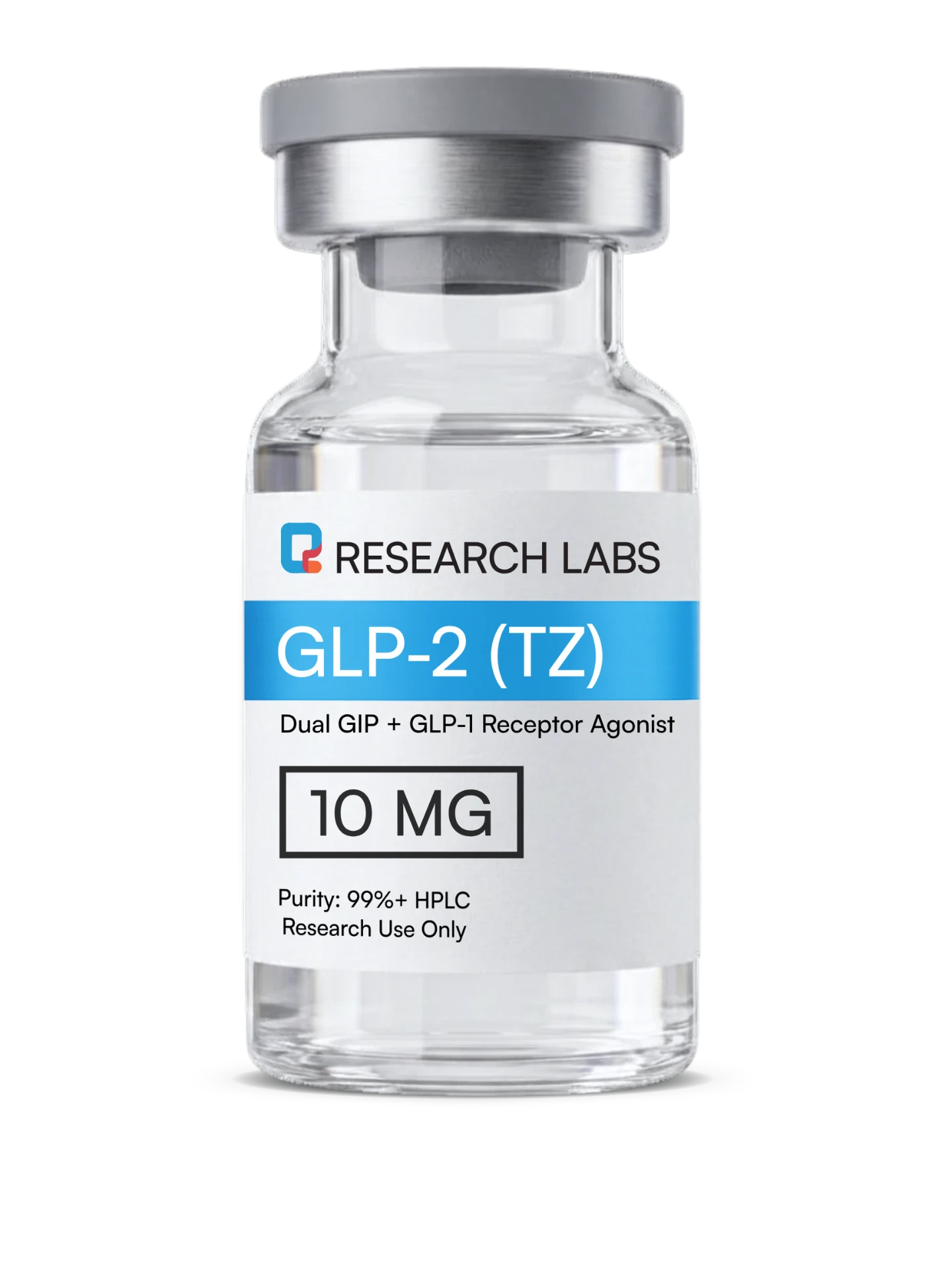
Quick Facts
- Type
- Single
- Category
- Metabolic / Weight Loss
- Vial Strength
- 10 mg
- Status
- Research
Research Purposes Only
This information is provided for educational purposes only. This content is not intended to diagnose, treat, cure, or prevent any disease. Always consult with qualified healthcare professionals.
Download Guide
Save the complete Tirzepatide 10mg research guide as a PDF.
Educational and research use only. Not medical advice.
Reference
Sources used for this guide are listed in our research database .
What Is Tirzepatide 10mg?
Tirzepatide 10mg Vial Overview
Tirzepatide is a dual GIP/GLP-1 receptor agonist that simultaneously activates two incretin pathways for synergistic metabolic effects. In the SURMOUNT-1 trial, participants receiving 15 mg weekly achieved average weight loss of 22.5% over 72 weeks. Tirzepatide also significantly improves glycemic control, with HbA1c reductions exceeding 2%. Its dual mechanism enhances insulin sensitivity and fat oxidation beyond what single-agonist GLP-1 drugs achieve.
Tirzepatide 10mg Quick Reference
Tirzepatide 10mg Vial Specifications
- Peptide
- Tirzepatide (10 mg Vial) (NNMT inhibitor)
- Vial Content
- 10 mg total peptide
- Category
- Metabolic / Weight Loss
- Administration Method
- Subcutaneous injection
- Common Use Case
- Maximum weight loss and metabolic optimization
Tirzepatide 10mg Compared With Other Formats
Details that distinguish this 10 mg format include:
- Dual GIP/GLP-1 agonism for synergistic metabolic effects
- Clinical data showing up to 22.5% body weight loss
- Superior glycemic control vs single-agonist alternatives
The 10 mg vial is the standard research format.
How Does Tirzepatide Work?
Tirzepatide Mechanism of Action
Tirzepatide is a dual incretin agonist that activates both GIP (glucose-dependent insulinotropic polypeptide) and GLP-1 receptors. GIP receptor activation enhances insulin sensitivity and may directly promote fat oxidation, while GLP-1 activation suppresses appetite and slows gastric emptying. This dual mechanism produces greater metabolic effects than single-agonist approaches. In SURMOUNT-1, 15 mg weekly produced 22.5% weight loss over 72 weeks.
What Are the Potential Benefits of Tirzepatide?
Tirzepatide Research Findings and Observed Outcomes
Findings and reported areas of study for Tirzepatide (10 mg Vial) include:
- Superior weight loss vs GLP-1 mono-agonists
- Significant HbA1c reduction (>2%)
- Improved lipid profiles
- Reduced insulin resistance
These observations are discussed for research and educational reference only and are not medical claims.
What Do You Need to Reconstitute Tirzepatide 10mg?
Tirzepatide 10mg Supplies for Reconstitution and Handling
- •Insulin syringes (29–31 gauge)
- •Bacteriostatic water
- •Alcohol prep pads
- •Sharps container
Supplies listed are for laboratory handling and research preparation purposes only.
Tirzepatide 10mg Administration and Research Protocol
Tirzepatide Injection Route, Frequency and Timing
Escalate dose every 4 weeks. For 10 mg+ doses from a 5 mg/mL concentration, split into two injection sites.
Tirzepatide 10mg Dosage Guide
Tirzepatide Dosage Ranges
The ranges below pair the listed dose with the draw volume for this product strength.
Tirzepatide 10mg Dosage to Syringe Units
Based on reconstitution below
| Target Daily Dose | Draw Volume | Units |
|---|---|---|
| 2.5 mg | 0.50 mL | 50 units |
| 5 mg | 1.00 mL | 100 units |
| 10 mg | 2.00 mL | 200 units |
This dosing table is unique to the 10 mg vial. Units refer to markings on a standard U-100 insulin syringe (1 unit = 0.01 mL).
How Long Does a Tirzepatide 10mg Vial Last?
Tirzepatide 10mg Duration by Research Dose
At common research doses, one 10 mg vial of Tirzepatide typically supports:
Extended protocols; clinical trials ran 72+ weeks.
How to Reconstitute Tirzepatide 10mg
Tirzepatide 10mg Reconstitution With Bacteriostatic Water
This section applies specifically to the Tirzepatide (10 mg Vial).
- Recommended Diluent
- Bacteriostatic water
- Diluent Volume
- 2 mL
- Final Concentration
- 5 mg/mL
Tirzepatide 10mg Mixing Instructions
- 1Remove the vial from storage and allow it to reach room temperature (10–15 minutes).
- 2Wash hands thoroughly and prepare a clean workspace with all supplies.
- 3Using a sterile syringe, draw the appropriate volume of bacteriostatic water.
- 4Clean the rubber stopper of the vial with an alcohol prep pad.
- 5Insert the needle at a slight angle and slowly inject the diluent down the inner wall of the vial.
- 6Gently swirl or roll the vial until fully dissolved; the solution should appear clear and colorless.
- 7Label the vial with reconstitution date and refrigerate at 2–8 °C (35.6–46.4 °F), protected from light. Use within 2–4 weeks.
Tirzepatide Stacks and Research Combinations
Tirzepatide and Compatible Research Pairings
In research settings, Tirzepatide (10 mg Vial) is sometimes paired with peptides such as:
Do not combine with other incretin agonists.
Factors That May Affect Tirzepatide Research Outcomes
Supporting Factors for Tirzepatide Research
Factors recorded alongside this protocol include:
- High-protein diet to preserve muscle mass
- Resistance training to counteract lean mass loss
- Adequate hydration
- Small, frequent meals during titration
These factors can affect how research observations are interpreted.
Tirzepatide Side Effects and Safety Considerations
Tirzepatide 10mg Tolerability Notes
GI effects are dose-dependent and improve with continued use. Gradual titration is essential.
Some individuals report:
- Nausea
- Diarrhea
- Decreased appetite
- Vomiting
- Constipation
- Injection site reactions
How to Store Tirzepatide Before and After Reconstitution
Tirzepatide 10mg Storage Requirements
- Unreconstituted
- Freeze at −20°C or refrigerate
- Reconstituted
- Refrigerate at 2–8°C
- Post-Mix Stability
- Up to 4 weeks reconstituted
Who Should Avoid Tirzepatide?
This peptide is generally not recommended for:
- Personal/family history of medullary thyroid carcinoma or MEN2
- Severe GI disorders
- History of pancreatitis
- Pregnant or breastfeeding individuals
Tirzepatide 10mg FAQs
How does tirzepatide differ from semaglutide?
Tirzepatide activates both GIP and GLP-1 receptors (dual agonist), while semaglutide only activates GLP-1. This dual mechanism generally produces greater weight loss and glycemic improvement.
What dose produces the most weight loss?
In SURMOUNT-1, the 15 mg weekly dose produced 22.5% average weight loss at 72 weeks, though 10 mg also produced substantial results (~20%).
Where to Buy Tirzepatide 10mg for Research
Tirzepatide 10mg Purchasing and Research Supply Notes
Before ordering Tirzepatide (10 mg Vial), review the product label, available testing documents, and storage instructions.
Check the ResearchLabs listing for:
- Available testing documents
- Product strength and concentration
- Storage and handling instructions
- Current product availability
View the current listing for Tirzepatide (10 mg Vial):
→ View on ResearchLabsConfirm the product strength and storage requirements before ordering. Products are for laboratory research only and are not for human consumption.
Quick Facts
- Type
- Single
- Category
- Metabolic / Weight Loss
- Vial Strength
- 10 mg
- Status
- Research
Research Purposes Only
This information is provided for educational purposes only. This content is not intended to diagnose, treat, cure, or prevent any disease. Always consult with qualified healthcare professionals.
Download Guide
Save the complete Tirzepatide 10mg research guide as a PDF.
Educational and research use only. Not medical advice.
Reference
Sources used for this guide are listed in our research database .